Thursday, March 6, 2014

PANAMA CANAL


Reason to go 

The Panama canal is at greater risk of a catastrophic earthquake than previously assumed, a seismological survey of faults around the canal has warned.
It reveals that two known faults adjacent to the canal are far more active than previously thought, raising the possibility of a major quake just as the canal is being widened and upgraded in a project due for completion in 2014.
The authors of the survey estimate that quakes occur every 300 to 900 years. The most recent one was in 1621, so another could happen at any time.
Location

The Panama Canal (SpanishCanal de Panamá) is a 77.1-kilometer (48 mi) ship canal in Panama that connects the Atlantic Ocean (via the Caribbean Sea) to the Pacific Ocean. The canal cuts across the Isthmus of Panama and is a key conduit for international maritime trade. There are locks at each end to lift ships up to Gatun Lake, an artificial lake created to reduce the amount of excavation work required for the canal, 26 metres (85 ft) above sea level. The current locks are 33.5 metres (110 ft) wide. A third, wider lane of locks is currently under construction and is due to open in 2015.

Ways to get there


The Canal is both an engineering marvel and one of the most significant waterways on the planet. Seeing a huge ship nudge its way through the narrow canal with vast tracts of virgin jungle on both sides is truly an unforgettable sight. As impressive as it is now, an ambitious expansion plan is set to completely transform the the canal.
Stretching 80km (49mi) from Panama City on the Pacific coast to Colón on the Atlantic coast, the Canal provides passage for nearly 14,000 ocean-going vessels per year. The easiest and best way to visit the canal is to go to the Miraflores Locks, on the northeastern fringe of Panama City, where a platform offers visitors a good view of the locks in operation. Although it's difficult to thumb a ride on an ocean-going vessel, there is no shortage of pricey tours and cruises that allow you to transit the canal - the entire journey takes an average of nine hours.

Things to do

1. Take a City Tour

Casco Viejo Cathedral
The best way to get to know Panama City is to take a City Tour .—see the link below to Tour Operators or ask your hotel for a tour. Most Panama City tours include the "three" Panama Cities: the ruins of the 16th century original city Panama Viejo or "Old Panama", the Spanish colonial city called Casco Viejo, and the modern skyscraper city. Mega attraction, the Panama Canal is included in most city tours.

What you'll see on a City Tour:

The Ruins of Old Panama City: Founded in 1519, Panama City is the first city founded on the West coast of the Americas. All the loot stolen from Peru went through here making it the target of English pirate Henry Morgan who destroyed it in 1671. A new colonial Panama City, Casco Viejo was built in 1673 and today is Panama City's vibrant historical sector. Finally you'll visit the Panama Canal at Miraflores Locks with an adjacent museum. One of man's greatest accomplishments— The Panama Canal.
You can take a city tour on the Two-Decker City Sightseeing Bus Tour bus on an amphibious Aqua Bus
Contact a tour operator: Tour Operator, or visit our Panama City destination page for more info.

2. Panama Canal Miraflores Visitor Center

Cruise ship in Panama Canal
The place to see the Canal is at the Miraflores Visitors Center at the Miraflores Locks. Just 20 minutes from downtown Panama City, your visit will be more interesting than you think. The Center features a museum with interactive exhibits and a short film on the building of the Canal. An outside terrace gives you close-up views of ships transiting through the locks. Visitor Center admission is $10.
Recommended: Have lunch at the Miraflores Restaurant on the terrace overlooking the locks as ships pass through. This meal will be a highlight of your Panama City experience. Call 232-3121 to make a reservation. Make sure to ask for a table on the terrace.

3. Casco Viejo, Panama City's Historical Sector—a UNESCO World Heritage Site

Casco Viejo Aerial View Panama
A stroll through Casco Viejo, the 341 year old Spanish colonial sector built in 1671 is a must-do. Casco Viejo showcases Panama's Spanish Colonial and Canal-Era history. A vibrant. colorful neighborhood, it's recently undergone a renaissance- restored hotels and restaurants in handsomely restored buildings lie side by side with crumbling old buildings. Casco Viejo is a ocean promontory- enjoy sea breezes and sweeping ocean and Panama City bay views. It is also now Panama City's hottest night life sector. Enjoy a great selection of restaurants and nightlife spots some with 360 views bay and city views. If you want to enjoy Latin culture, don't miss Habana, a salsa dance spot featured in an episode of the Bachelor.
Casco Viejo was was also featured in the James Bond Quantum of Solace film.

If your coming to to Panama for tourism, we recommend staying in one of Casco's boutique hotels or hostels.
You can hire a Tour Operator or you can enjoy the area's sights using one of the walking tours in the PanamainfoGuid app, Lonely Planet or Frommers Guide.
Many foreigners are also choosing Casco Viejo as a place to live. Experts like Arthur Frommer of Frommer's Guides, have noted that Casco Viejo is on the way to becoming one of most beautifully restored Spanish colonial cities in the New World.

Highlights:

French and Spanish historical architecture, 17th century churches, a French monument to the 22,000 Frenchmen who died building the Panama Canal, an electric nightlife scene, savory cuisine, and the city's best souvenir shops. For special jewelry go to Reprosa. For a refreshing snack try Granclement—an old fashioned French ice-creamery. In the evening, Casco Viejo transforms into a thrilling night life scene/ For more complete info see our Casco Viejo destination Page.

4. Bike or stroll on Amador Causeway

Amador Causeway
Dazzling views of Panama City's skyline and of the Panama Canal make the Amador Causeway a scenic place for open-air activities. The stretch unites four small islands and was built using rocks excavated from the Panama Canal. It also serves a functional purpose as a breakwater to the entrance of the Canal.
Swept by pleasant sea breezes, there are bicycle and jogging paths (bicycles for rent for just $5-10 an hour!), restaurants for a variety of budgets, souvenir shops, a duty-free shopping complex, a cruise port, and a yacht marina. The restaurants are designed to make the most of the ocean and Canal views. TGIF at the Country Inn and Suites has an especially nice set-up. While dining, you can glimpse the Panama Canal and ships passing under the Bridge of the Americas, once the only strip that connected North and South America.

5. Dine Out: Panama City- In the Top Ten Latin American Cities for Dining

Nightlife Sushi Panama
Panama City's Restaurants are rated by Trip Advisor as one of the Top Ten Best Latin American cities for restaurants. As an international crossroads, Panama City restaurants offer a great variety cuisines for every price-range. Most restaurants are located in the business district, historic Casco Viejo, or the Amador Causeway.
We recommend that you try the local delicacies including ceviche, carimanolas, arroz con pollo, sancocho soup, hojadras. You can also try the Panamanian dishes while also enjoying folkloric dancing at either Tinajas or Los Diablicos. For gourmet Panamanian cuisine, go to Sal Si Puedes at the Bristol Hotel.

For more restaurant suggestions and descriptions we recommend you visit our Restaurants page, and our Panama City Restaurant Picks.
Panama Casino

6. Rainforest in the City: Ancon Hill and the Metropolitan Park

A Nature Hike With Views: Ancon Hill
There's no better way to see Panama's past, present and future than to take a hike up Ancon Hill where you'll have a bird-eye's view of Casco Viejo, modern Panama City and the Panama Canal. The path is lined by thriving rainforest and should be explored in the morning to avoid the scorching midday sun and afternoon tropical showers. It takes about 2 hours to get to the top. You can take a taxi there and ask the driver to come back for you in a couple of hours.

Tucan Panama
Metropolitan Park Eco Tour
Panama City has the only Rainforest in the world within the city limits of a metropolis. The Metropolitan National Park is around a 15-30 minute drive from anywhere in the city and you can hike up it's slopes to enjoy panoramic rainforest and city views. . Tour Operators offer guided nature tours of the park—you will need a professional guide to explain the tropical flora and fauna.

At the Metropolitan Park - the Canopy Crane Tour: The Canopy Crane tour by Ancon Expeditions takes you up in a crane used by the scientists of the Smithsonian Institute to research the rainforest canopy and experience nature as close-up as it gets. A eco-experience plus spectacular views of the city, bay and Panama Canal. (Tel: +507-269-9415)

7. Enjoy the Nightlife

Decapolis Bar Panama
At nightfall Panama City becomes a nightlife hotspot. Casinos, clubs, and bars with exquisite views and venues come alive. Enjoy creative tropical drinks and sensual Latin music and dancing. Panamanians enjoy dressing to the nines, so be sure to bring something that will make you shine. The best nightlife spots in Casco Viejo is the famous Habana Salsa Dance Floor and serverl roof top venues with bay views. Calle Uruguay in the financial district, has an English pub, restaurants, and bars and clubs with DJs that rival Miami's. The breezy Zona Viva nightlife complex on Amador Causeway has a strip of clubs. Rana Dorada, a small micro-brewery in El Cangrejo and Casco are for beer lovers. For more info check out our Nightlife page.

8. Shop for Souvenirs and Native Handicrafts

Panamanian native handicrafts rival Mexico's in their beauty and creativity. Leave Panama with an authentic handicraft made by one of Panama's seven living indigenous tribes. The most popular are "molas," intricate reverse appliqué embroidery sewn by the woman of the Kuna Indian tribe. Other handicrafts include the hand-woven baskets of the Embera Indians of the Darien jungle—similar to baskets woven by Navajo Indians—and tagua nut sculptures, which are tiny figures skillfully carved from the tropical tagua nut.
Panama Handicrafts Molas
Panamanian Molas
For a special jewelry gift, visit the Reprosa jewelry store and Rainforest Design cameo jewelry.
Reprosa has shops in the Business District and in Casco Viejo. Its jewelry collection includes reproductions of Pre-Columbian Indian art, reproductions of Spanish colonial jewelry and collections inspired by Panama's flora and fauna. There is a gift for every budget. (Tel:269-0457)
Rainforest Designs are stunning cameo jewelry with rainforest motifs carved by the Wounan Indians. They can be found at the Marriott Hotel Gift Shop,

Where to find souvenirs: The most complete selection is in the Artisans market on Amador Causeway- highly recommended. In Casco Viejo we recommend the Galeria de Arte Indigena—just off the French Plaz. For jewelry in Casco, go the gorgeous Reprosa store. In downtown Panama City, Gran Morrison variety store has a large selection. plus the best selection of books about Panama.

9. Visit the Frank Gehry Biodiversity Museum

Set on scenic Amador Causeway, this museum is another stunning Gehry architectural triumph. Inaugurating in January 2014, you can take a pre-opening tour. State-of-the art exhibits are by the famed Bruce Mau. The $90 million ocean-front project features interactive exhibits about how the emergence of the isthmus of Panama changed the ecology of the world forever and Panama's present eco- wonders.

10. For History Buffs: Panama Viejo- Ruins of the Original Panama City

Panama Viejo, Old Panama Ruins
It may already be on your city tour, Panama Viejo (Old Panama) was founded in 1519 by the Spanish. It was the first city on the West coast of the Americas serving as the gateway city for the Spanish conquest of Latin America. All the loot sacked from the Inca empire came through here. Once a thriving city of 10,000, today's extensive ruins are the result of an attack by English pirate Henry Morgan in 1671 which, along with a fire, leveled the city. There is a small museum, but go with someone who speaks Spanish, because the exhibits are mostly in Spanish.

How to Get Around Panama City

You can take a tour with a tour operator or go with City Sightseeing. Board their hop-on-hop-off emblematic red double decker buses which take you to the all major tourism attractions for just $29 for the day. Also check out the Panama Trolley which also goes to all the major Panama City Attractions for 28$ a day.

More Things to Do in Panama City

Try Your Luck- Casinos

Over seven million dollars are gambled each day at Panama City's casinos, making it one of the region's top destinations in this area. Some of the best casinos are at the SheratonThe Marriott, and the El Panama Hotel. The Veneto Wyndham Grand Hotel comes closest to a Las Vegas style casino and also has $700,000 prize poker tournaments.
For more Nightlife info see our page: Panama City's Top Nightlife Spots.

Golf

Panama golf Canal zone
It takes just 30 minutes from downtown Panama City to get to the Summit Radisson Resort to play golf on a designer-course nestled into the jungle. The course is near the Canal and you can arrange transportation with your hotel. Tel: 322.4000. For more information visit our page on Golfing in Panama.

MAGDALEN ISLANDS, CANADA


Reason to visit
An idyllic island getaway in the Gulf of St. Lawrence, Îles-de-la-Madeleine's (French) white sand beaches and sandstone cliffs are steadily eroding. Strong winds have always been part of life on the islands, and they make for notable kite surfing. But Canadian Geographic reported last year that the high concentration of sea ice currently shielding the archipelago's shores from destructive storms is disappearing. Climate researchers estimate the protective ice will be gone sometime between 2050 and 2090. Currently, anywhere from four to 43 inches of coast are lost each year, and intense storms can destroy up to three feet along certain cliffs.

Location 

The Magdalen Islands (French, Îles de la Madeleine) form a small archipelago in the Gulf of Saint Lawrence with a land area of 205.53 square kilometres (79.36 sq mi). Though closer to Prince Edward Island and Nova Scotia, the islands form part of the Canadian province of Quebec.

The islands form the territory equivalent to a regional county municipality (TE) and census division (CD) of Les Îles-de-la-Madeleine. Its geographical code is 01.
The islands also form the urban agglomeration of Les Îles-de-la-Madeleine, divided into two municipalities. These are Les Îles-de-la-Madeleine (2006 census pop. 12,560), the central municipality, and Grosse-Île (pop. 531). The mayors are Jonathan Lapierre and Rose Elmonde Clarke.


Ways to get there

Fly into Îles-de-la-Madeleine Airport, board a ferry from Prince Edward Island, or take a cruise from Montreal.


Things to do

  • Learning to kayak and canoe and sail at L’istorlet.
  • Bicycle the islands! They are only 100km by road.
  • Family camping and a multitude of family related activities at La Salicorne.
  • Learning to kite surf and sail surf at AeroSport Adventure Center.
  • Learn to ride horses at La Cringere au Vent Equestrian Center.
  • Take the family golfing on our nine-hole course or mini-golf at the 18-hole course at Sillons.
  • There are any number of eco-museums on the islands, Muse de la mer, CAMI, Salt Mine, Hydro-Quebec, Elie of Francois’s Museum,  Entry Island Museum, Aquarium, Seal Interpretation Center, and the Sand EcoMuseum are a few but every year brings new and exciting cultural activities.


Wednesday, March 5, 2014

REPUBLIC OF MALDIVES

Reason to visit
The highest point of Maldives is just 2.4 meters from the sea-level while the average is 1.5 meters. Reports says that 80% of the Maldives will be disappeared in the water grave if the sea-level rise just 1.5 meters. Currently there are 386,000 inhabitants in Maldives and all of them shall be relocated in India, Srilanka and Australia.
In 2009, the Maldives cabinet held a meeting underwater with the president Mohamed Nasheed to highlight the threat of global warming and rise in sea-level to Maldives. While underwater, they communicated through white boards and hand signals. 
Location

The Maldives archipelago is located on top of the Chagos-Maldives-Laccadive Ridge, a vast submarine mountain range in the Indian Ocean. Maldives also form a terrestrial ecoregion together with the Chagos and the Lakshadweep.The Maldives atolls encompass a territory spread over roughly 90,000 square kilometres (35,000 sq mi), making the country one of the world's most geographically dispersed. Its population of 328,536 (2012) inhabits 192 of its 1,192 islands. In 2006, Maldives' capital and largest city Malé, located at the southern edge of North Malé Atoll, had a population of 103,693. Malé is one of the Maldives' administrative divisions and, traditionally, it was the "King's Island" where the ancient Maldives royal dynasties were enthroned.
The Maldives is the smallest Asian country in both population and land area. With an average ground level elevation of 1.5 metres (4 ft 11 in) above sea level, it is the planet's lowest country. It is also the country with the lowest natural highest point in the world, at 2.4 metres (7 ft 10 in).Forecasts of Maldives' inundation is a great concern for the Maldivian people.

Ways to get there


By air: The international airport is located on the island of Hulhule. There are more than 2 dozens of international schedule flights flying into Maldives from major cities in asia, middle east and Europe. These include SriLankan Airways, Qatar airways, Singapore Airlines, Emirates, Indian Airlines, Balkan, Bulgarian Airlines, LTU, Condor, AOM French, Austrian Airlines and Malaysian Airlines, with some of these airlines flying daily, weekly or twice a week.
Another 14 companies offers regular charters, among them include Britannia Airways, Balair, Monarch Airlines, Lauda Air, Air Europe of Italy, Sterling Airways, Air Holland, South African Airways, Air Tours International connecting the Maldives to many centers of the world.

Things to do


Ten things you must do in the Maldives:
1. Swim with whale sharks or manta rays. The Maldives is one of the few places where you can snorkel alongside these gentle giants. 
2. Visit a traditional Maldivian village to meet the locals.
3. Explore the country’s capital, Malé.
4. Join local fishermen on a deep-sea fishing trip. 
5. Take to the sea on board a dhoni, a traditional wooden sailboat.
6. For the ultimate romantic treat, enjoy a sunset champagne cruise while spotting dolphins and flying fish.
7. Adopt your own coral reef at the Beach House Iruveli.
8. Be a castaway. Most resorts offer the option of time on a deserted island. 
9. Try an invigorating Maldivian massage at the Beach House Iruveli’s De’ Spa complex.
10. Get married. The Maldives is one of the world’s most popular spots to renew vows or have a wedding blessing.

REPUBLIC OF MADAGASCAR


Reason to visit
The main historical problem with international trade has been the correlated destruction of the environment. This is especially true when it comes to the issue of deforestation. In Madagascar, people have been cutting down the forests for decades. Throughout the past century, much of the rainforests of Madagascar have disappeared. People have begun moving out of the cities, industries have started to expand, and the use of land for farming (particularly coffee) has dramatically increased. All of these phenomenon have led to the destruction of the forest of Madagascar. This has become a major issue, not only because of the value that the forest have on the living environment on earth, but also because of Madagascar's unusual and rare species. Biologically, Madagascar is one of the richest areas on earth. Approximately five percent of the world's species reside in Madagascar, and the island has 8,0000 endemic species of flowering plants alone (New Scientist, 1990). However, this rare jewel of earth is in grave danger. Rapid deforestation, caused predominantly by the large population boom of the developing country, economic downturn, and mass migration to cities, is destroying much of the natural habitat of Madagascar.

Location

Madagascar is an island located in the western Indian Ocean. Madagascar lies about 425 km (266 miles) off the east coast of Southern Africa. Specifically, Madagascar is located east of Mozambique, across the Mozambique Channel. The geographic coordinates of Madagascar are 20 00 S, 47 00 E. 

Madagascar's land area is about 581,540 sq km (224,533 square miles) or slightly less than twice the size of Arizona. Madagascar has 4,828 km of coastline. 
Madagascar is the world's fourth largest island. Its most prominent feature would have to be the steep mountain range paralleling the entire eastern coast.

Ways to get there


Air: Cortez Travel can handle all of your travel arrangements - flights to Madagascar are available and prices are comparable for any of the following routings, and specials are offered year-round:
  • Via Paris: most direct routing from all U.S. and Canadian departure cities; no charge for stopover in Paris in either direction.
     
  • Via Johannesburg: may require an overnight in Johannesburg and generally recommended only when making arrangements for additional travel within South Africa.
     
  • Via Bangkok or Singapore: recommended only for those traveling from the West Coast (and going through Singapore would require at least two changes of plane en route).
     
  • Additional routings to include Mauritius or Reunion are possible and will be quoted upon request.
As a courtesy for trip planning purposes, we provide airline flight schedules for international flights to and from Madagascar, and for regional flight sand domestic flights in and around Madagascar.

Things to do

The things to do in Madagascar can be found nowhere else in the world.  There are animals and plants that are endemic that can’t be found anywhere else in the world including the Lemur Monkeys and even see through chameleons to name a few.  There are still parts of Madagascar that haven’t been discovered yet which is very rare for any country in the world.  It is one of the poorest countries in the world but also one of the safest countries in Africa thanks to the unique Malagasy culture.
Explore the Beaches
In Madagascar, you will find beaches that are on the tourist trails and others that haven’t even been explored yet.  There is something for everyone whether you are looking for luxury or something more authentic.  The most popular beaches are in Diego,  Anakao, the areas surrounding Morondava, and the islands of Nosy Be, Sainte Marie, & Nosy Ve.
Avenue of the Baobabs, Avenue of the Baobabs Sunset, Avenue of the Baobabs Madagasacar
Avenue of the Baobabs in Madagascar
Avenue of the Baobabs
The unique Baobab trees can be found all around the country.  Just an hour away from Morondava there are a unique set trees lined along the road where you can get exceptional pictures at sunset.
The Big Tsingy Stone Forest in Madagascar
The main tourist attraction in Madagascar that I came to see is beyond impressive.  It’s not easy getting there as it takes 1 complete day via 4×4 on very rough terrain.  There are two parks, Big Tsingy (large park) and the Small Tsingy (small park).  You won’t regret it!
Explore the Wildlife
There aren’t many other places in the planet that can say they have countless flora & fauna not found anywhere in the world.  Throughout the entire island you can find the 70 different species of Lemurs and see through chameleons as mentioned above.
Madagascar & the islands surrounding the country have eight plant families, five bird families, and five primate families that live nowhere else on Earth.  The parks you want to see are Berenty, Andasibe-Mantadia, Ankarana Montagne d’Ambre, Kirindy, Ranomafana, and Masoala.
Rice Terraces in Madagascar
Rice Terraces in Madagascar countryside
The Capital of Antananarivo (Tana)
While the capital of Madagascar doesn’t boast the architectural prowess of capitals in Europe, the city is unique in its own right.  The market that winds up and down the staircases will astound you.  Don’t forget to see the Royal Hill of Ambohimanga, Marché Artisanale de La Digue, and the Lemurs Park that is found just outside the city.
Diving in Madagascar
With so much coastline and unique plants and animals, its no wonder that Madagascar has great diving opportunities.  I was able to get my advanced diving certificate on the south western coast of the island.  The diving hotspots are mainly in the Northern coast in the cities of Nosy Be & Diego.  You can also find good diving in Ifaty, Anakao, Morondava, and around the islands of Sainte Marie.
A fisherman in Madagascar, fisherman
Interact With The Locals
I have to say that while most cultures from around the world are unique, the Malagasy people take it to a whole new level.  You can see the diversity on their faces and they are some of the nicest and welcoming people you will meet.  Always extremely curious and willing to talk to you (if you speak Malagasy or French).  Make sure to buy pens, candys, or even notebooks for the kids, they will love it.
Whale Watching in Madagascar
You are able to see humpback whales throughout the entire year near the waters of Saint Marie on the eastern coast.  The best time to see the whales is between June to September but you are still able to see them year round.


KOMODO ISLAND, INDONESIA


Reason to visit
The home of the world’s most famous reptile could end under the water surface in few decades if the Global Warming continues to progress. The sea surrounding the island is growing and could cause extinction of the Komodo dragon, but the increased acidification could also cause big damage, as it make the surface temperature higher, which may eventually kill the corals around the island and destroy the amazing diving sites.

Location

Komodo is one of the 17,508 islands that compose the Republic of Indonesia. The island is particularly notable as the habitat of the Komodo dragon, the largest lizard on Earth, which is named for the island. Komodo Island has a surface area of 390 square kilometres and a human population of over two thousand. The people of the island are descendants of former convicts who were exiled to the island and who have mixed with Bugis fromSulawesi. The people are primarily adherents of Islam but there are also Christian and Hindu congregations.
Komodo is part of the Lesser Sunda chain of islands and forms part of the Komodo National Park. In addition, the island is a popular destination fordiving. Administratively, it is part of the East Nusa Tenggara province.
Komodo lies between the substantially larger neighboring islands Sumbawa to the west and Flores to the east.

Ways to get there

Before setting out on your visit, and learning how to get to komodo,  it is important that you understand where you are heading and the easiest ways to get there. Komodo is in the middle of the Indonesian archipelago, and is between Sumbawa and Flores islands. The fact that Komodo is a UNESCO reserve for both a marine diversity and of course the Komodo Dragon makes this a growing tourist destination. The snorkeling and diving in the National Park is almost unsurpassed, and it is completely understandable as to why one would want to go. Now that you know where you are going let us discuss the best ways for you to get there. 
Any tour to Komodo will start and finish in Labuan Bajo. This is the main transportation hub for the whole province. There is the airport, ferries, buses, local boat service and multiple private car hire services.  With 5-7 flights a day to Denpasar and then onto international flights, it is readily accessible. There are daily ferries to Sape on Sumbawa and weekly ferry service to Sulawesi aboard Pelni. Due to time and accessibility, nearly all visitors fly in and out via Labuan Bajo Airport – it’s even called Komodo airport!
The personal way to visit Komodo is to charter a boat for at least 2 days with one 1 night on the boat. Certainly longer charters are available, and needed to see much more of the park. But to see the dragons, sleep in the park, visit a few beaches and snorkeling. Most of the charter boats are fairly small, with limited facilities, so any trip longer than 2 nights would require re-supply at LBJ. There are larger charter boats can go for about a week without re-supply, The small boats usually come with a crew of 2, captain and mate.
The boat choice is basically with or without a cabin. Boats with a cabin are usually a little bigger and include an upper deck sitting area. The upper deck sitting area is nice to have for photo taking or just escape from the boat’s noisy engine. Prices can vary wildly – but with good haggling you should pay about $300 USD for all food and beverage on the boat, including a full load of beer, sodas, and water. Komodo National Park Fees are not included and have to be paid directly to the park’s contract operator.
Things to do
  1. Loh Liang. The activities you can do: observing the Komodo, deers, hogs, birds; canoeing, etc.
  2. Pink Beach. The beautiful beach with the pink-coloured sand and alluring corals. The activities you can do: snorkeling and sunbathing.
  3. Loh Sebita. Loh Sebita is a mangrove area, thus observing the fauna and trekking are the interesting activities you can do here.
  4. Loh Buaya. The activities you can do: observing the Komodo, deer, buffaloes, birds, long-tailed monkeys and wild horses; canoeing.
  5. Kalong Island. The activities you can do: observing numerous bats in a colony. The best time to do this is at sunset when all the bats start to fly off to haunt food. It’s just amazing!
  6. Golo Kode. From the top of the hill known as Golo Kode, tourists may witness the enchanting panorama and fantastic landscape.
  7. Molo Strait.  The strait that has a swift current like the river flow at its hight tide.
  8. Cannibal Rock. Famous for its varied and colorful invertebrate life. Night dives are excellent, especially on the sandy slope of the northern side of the island starting at about 25 m depth.


Monday, March 3, 2014

GREAT BARRIER REEF, AUSTRALIA


Reason to visit
The Great Barrier Reef is one of the seven natural wonders of the world, home to an incredible diversity of sea life. It's the largest coral reef in the world, covering more than 345,000 square kilometers. But lately, the reef is losing more and more of its living outer layer. That's according torecent research in Proceedings of the National Academy of SciencesLooking back to 1985, scientists found that thenumber of living polyps has declined from more than 25 percent of the reef's surface to just under 14 percent. Most of that loss has come in the last decade or so in areas where humans live closest to the reef.
The problem is the number of challenges facing the reef. There's coral bleaching due to the hot temperatures induced by human-caused climate change. There's our sewage and agricultural runoff flowing into the sea. There are even outbreaks of coral-chomping starfish, aided and abetted by human activity. Not all is lost. The relatively pristine northern end of the reef shows that coral could recover, given the chance. For that to happen, we all will have to do more to combat climate change.

Location 
The Great Barrier Reef is the world's largest coral reef system composed of over 2,900 individual reefs and 900 islands stretching for over 2,600 kilometers (1,600 mi) over an area of approximately 344,400 square kilometers (133,000 sq mi). The reef is located in the Coral Sea, off the coast of QueenslandAustralia.
The Great Barrier Reef can be seen from outer space and is the world's biggest single structure made by living organisms. This reef structure is composed of and built by billions of tiny organisms, known as coral polyps. It supports a wide diversity of life and was selected as a World Heritage Site in 1981. CNN labeled it one of the seven natural wonders of the world.[8] The Queensland National Trust named it a state icon of Queensland.
A large part of the reef is protected by the Great Barrier Reef Marine Park, which helps to limit the impact of human use, such as fishing and tourism. Other environmental pressures on the reef and its ecosystem include runoff, climate change accompanied by mass coral bleaching, and cyclic population outbreaks of the crown-of-thorns starfish. According to a study published in October 2012 by the Proceedings of the National Academy of Sciences, the reef has lost more than half its coral cover since 1985.
The Great Barrier Reef has long been known to and used by the Aboriginal Australian and Torres Strait Islander peoples, and is an important part of local groups' cultures and spirituality. The reef is a very popular destination for tourists, especially in the Whitsunday Islands and Cairns regions. Tourism is an important economic activity for the region, generating over $3 billion per year.

Ways to get there
AIRPORT
There are no direct flights to the Great Barrier Reef, but Virgin Blue (www.virginblue.com.au) and Jetstar (www.jetstar.com.au) do fly from Brisbane, Cairns, Sydney & Melbourne to Hamilton Island and Proserpine (Whitsunday Coast). For flights from London, either go to Cairns or Brisbane, and from there you can travel by water taxi or seaplane to your island destination.

AIRLINES FROM THE UK
(0844 493 0787; www.britishairways.com) flies from London, via Brisbane, to Cairns; Qantas (020 8600 4300; www.quantas.co.uk) flies directly to Cairns; and Garuda Airlines (www.garuda-indonesia.com) offer seas return ticket to Cairns, via Bali.

Austravel (www.austravel.com) offers tailor-made package holidays to most islands, including Heron, Lizard, Dunk and the Whitsunday Islands. Tailor Made Travel (www.tailor-made.co.uk) has an 'Australia Naturally' brochure, which features personalised packages to the Great Barrier Reef and all around Australia.

In general, visiting the Great Barrier Reef is far from cheap, but most resorts do have cut-rate deals. Resort reservations made through local airlines or Qantas can produce savings, particularly in the cost of round-trip transfers, which are often not included in the resort rate and vary wildly. For last-minute travellers, standby packages are often available; travel agencies in Arlie Beach specialise in these: try Whitsunday Travel Centre (www.whitsundaytravel.com.au). When making reservations directly with a resort, ask about special deals and discounted rates.

Things to do
Great Barrier Reef Snorkeling Cruise
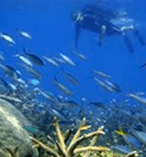
Great Barrier Reef Snorkelling CruiseThe beauty of the Great Barrier Reef is apparent as soon as you set your eyes upon it; however, put your head under the crystal-clear water and you'll be immediately exposed to the astounding array of beautiful life forms that dwell just under its surface.
A snorkeling trip will allow you to escape into this new world full of surprises, and a cruise that will take you to the magnificent Outer Reef to a spacious activity platform permanently moored at a wonderful site will serve as the ideal springboard for guests of all ages – swimmers and non-swimmers alike – to enjoy a day of discovery. You can snorkel directly from the platform and instantly find yourself among stunning coral gardens and colorful marine life – or you can take part in the Eco talks, reef presentations, board an air-conditioned semi-submersible for views without getting wet, and enjoy morning and afternoon teas along with a delicious gourmet lunch.
Outer Reef Snorkeling Cruise
Port Douglas Reef Snorkelling CruisePort Douglas provides another natural departure point to experience the joys of the Great Barrier Reef, and the Outer Reef in particular is in its own class; brimming with vibrant coral gardens and diverse marine life, it makes for one of the best snorkeling destinations in the entire world.
This cruise will take you aboard a speedy, wave-piercing catamaran all while in air conditioned comfort to the highly regarded Agincourt Reef – a jewel-like ribbon reef on the very outer edge of the Great Barrier Reef proper that showcases a series of unsurpassed coral formations, colorful marine creatures and an outstanding level of underwater visibility. A spacious activity platform awaits that allows you to participate in a huge range of reef activities including snorkeling and diving, semi-submersible viewing, fish feeding presentations and much more.

Green Island Day Trip

Green Island Day CruiseGreen Island is a stunningly beautiful coral cay that lies approximately 45 minutes off the coast of Cairns via catamaran that has existed for around 6000 years, and today acts as home to over 120 native species of plants and colorful bird life – a true nature lover's paradise in the heart of the Great Barrier Reef. A true paradise for nature-lovers, this day trip to Green Island includes snorkeling as well as an informative glass bottom boat tour that will allow you to fully explore this lovely island destination.
Many additional inclusions are provided within the package, such as the use of the island's great swimming pool and an Eco island walk to discover some of Green Island's distinctive rain forest flora. A range of restaurant and cafe-style lunch options along with additional activities including scuba and helmet diving, para sailing and scenic helicopter flights are also available upon request, making the day as involved or laid back as you choose.

Hot Air Ballooning

Hot Air Ballooning CairnsThe great heights that hot air ballooning will send you to will provide amazing views not only of the Great Barrier Reef itself but also the incredible natural surroundings that make up the geography of this tropical north Queensland region.
Ascend into the skies above Cairns and experience the sheer wonder, romance and silent serenity of the far north QLD bush land, golden sand beaches and stunning azure waters. After you've experienced the reef and the rain forest up close, a hot air balloon ride is the next best thing to do at the Great Barrier Reef – a breathtaking experience that cannot be missed!

Whitewater Rafting

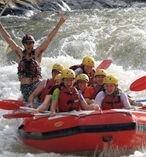
Whitewater Rafting CairnsPristine rain forest, crystal-clear rivers and breathtaking scenery are just a few of the reasons to take a whitewater rafting trip on the beautiful Russell and Barron Rivers, located just a short distance inland from the Great Barrier Reef. As some of the most popular rafting destinations in the world, these two great waterways offer unequaled chances for an affordable, exciting and exhilarating day out.
A series of different rapid courses ranging from grades one to four ensure that there is something available for people of all experience and skill levels, and most packages also include a relaxing picnic lunch. All rafting trips are guided by skilled guides who will show you the best ways to negotiate the rapids while maintaning a premium on safety so that you can simply enjoy the feeling of excitement without ever feeling a true sense of danger. Whether travelling as an individual, couple, or group, whitewater rafting near the Great Barrier Reef is an experience that will serve to make you feel more alive!

Low Isles Sailing Cruise

Low Isles Sailing CruiseSet sail for the Low Isles of the great barrier reef – a true tropical island paradise – that combines ideally with the inherent romance of sailing aboard a luxurious 30m sailing catamaran on this Low Isles Sailing Cruise. One of the true jewels of the Great Barrier Reef, the Low Isles are an idyllic series of unspoiled islands that provide a perfect microcosm of what the Reef and its surrounds are all about.
Mooring in a calm, picturesque lagoon, a huge range of reef activities await to be participated in including glass-bottom boat rides to view the wide array of marine life, snorkeling over the colorful coral gardens filled with turtles and brilliantly vibrant fish, guided beach walks, or simply relaxing on the beach or on the decks of the boat while soaking in some sunshine – taking time in the middle of the day to enjoy a delicious tropical buffet lunch.
Great Barrier Reef Scenic Helicopter Flight
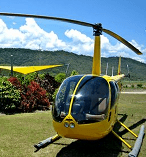
Low Isles Sailing CruiseFlying from Port Douglas aboard a helicopter and heading out over the reef is one of the best ways to gaze down through the surface of its pristine, transparent waters to witness the coral and other marine life from directly above. Helicopter rides offer a vantage point of the Reef rarely seen by most people, as hovering at low altitudes allows you to witness the wonders that leave beneath from close up.
Once we reach your destination we'll land for a hot and cold tropical buffet lunch and give you the chance for a snorkeling adventure, underwater observatory, or semi-submersible viewing session to witness the reef from an under-the-surface perspective.

Explore the Daintree Rain forest

Daintree Rainforest Tours CairnsThe amazing blues of the ocean that blankets the Great Barrier Reef is not the only visually incredible display on offer in the region; look inland and you'll soon come across the vibrant greens of some of the oldest and most beautiful rain forest in the world – the ancient and World Heritage-listed Daintree Rain forest. Regardless of whether you choose to divide the day between the reef and the rain forest or spend your time exploring this wondrous green ecological playground, the Daintree will doubtlessly leave an impression on you that will last a long time.
Brimming with wonderful wildlife and lush surroundings that make this area of far north QLD one of the most popular holiday destinations in the world, you'll find some of the last vestiges of the most ancient rain forest where a combination of primitive animals, plants and an indigenous culture still thrive to this day.
Take a Seaplane Flight over the Whitsundays
Whitsundays Scenic FlightsBordered by the Great Barrier Reef on one side and 74 tropical islands that lie in the calm waters of tropical north QLD's Coral Sea, the Whitsunday Islands lie midway along Queensland's coast. A huge number of spectacular destinations can be found within this island chain, including Heart Reef, Hardy Lagoon and White-haven Beach, and there are few better ways to gain an appreciation for their beauty than by a scenic seaplane flight that will take you directly above these natural marvels.
Travelling at varying altitudes and the ability to fly close to the ocean's surface means you'll be able to soak in the incredible colors and textures of the Whitsundays and the Barrier Reef in the span of half a day, with numerous different options available that each emphasize a different aspect of this stunningly beautiful Australian archipelago.
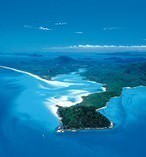
Whitehaven Beach CruiseRecently dubbed The Best Beach in Australia, White-haven Beach is an emblem that embodies what everyone's image of the Great Barrier Reef is all about. With its pristine white silica sand clashing beautifully with the surrounding vibrant blue waters, it's not hard to see why White-haven is such a highly regarded travel destination. Be sure to take some time to simply absorb the beach - it's the perfect excuse for some down time among the cavalcade of water sports and other activities you'll no doubt be otherwise occupying yourself with - by picking up a handful of the finely-grained sand and feeling it run through your fingers.
Various tours are available that will take you to White-haven Beach and offer different itineraries, and the majority offer a comprehensive look at all aspects of not just the beach but its surrounding islands and diving/snorkeling spots as well. Stretching out over a fairly substantial expanse of around seven kilometers in total, White-haven is not just some little pocket of beach that happens to be picture-perfect; it's a true, expansive beach that is large enough to ensure that even in peak seasons you'll likely still be able to garner a sense of solitude.
The beach is rarely overcrowded, and those visiting the Great Barrier Reef are advised to get their visit in quick as the beach's increasing worldwide fame and reputation may lead to its conditions beginning to deteriorate in the near future. You can book a full day cruise to White-haven by clicking the link below.